Pin tail and Squash tail
Difference between a Pin tail and a Squash tail
Written by Roderick Pijls
Tail variations
When I started kitesurfing I chose a directional kiteboard without too much consideration. I bought a set of fins and a leash and took off with it. I didn’t pay any attention to the size or thickness of the board. And I certainly hadn’t been paying attention to the board’s tail. I didn’t even know there were different kinds of tails! Nowadays, after many years of riding a strapless board, I notice every small change in the board. A little more rocker, a 2-inch smaller board or the differences in the tail. I can feel it right away.
How to recognize the differences
Looking at my quiver, I can divide the boards into two groups. The first group has a pintail. The second group has squash tails. A squash tail looks like it’s crushed on the ground. The tail is square and if we compare it to the pintail it has a bit more volume. A pin-tail board has, simply put, the same tail as his nose. The tail is sharper than a squash tail. In the beginning I didn’t even notice it, but nowadays I feel a lot of difference in the tail variations.
-
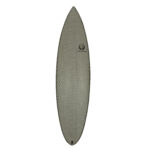
- Pin tail
-
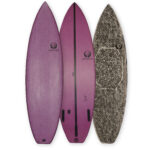
- Squash tail
What’s preferable?
There are people who always ride a pintail board. From small to big waves. And there are riders who prefer to ride a squash tail all the time. I prefer both. Based on the conditions of the session I choose a pin tail or a squash tail. I always go for a squash tail in small to head high waves. When the waves get bigger than the overhead, I choose my pintail. Big waves often mean that your speed on the face of the wave increases.
Control
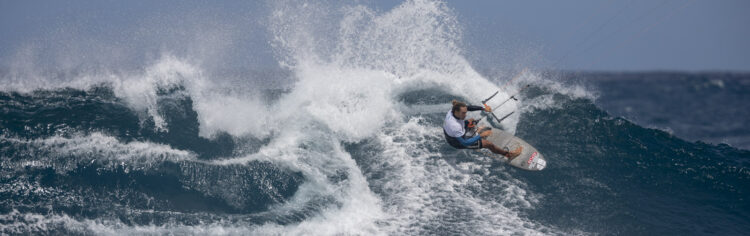
When I’ve ridden a squash tail for a long time and I change to a pintail, I immediately feel the difference. I notice that a squash tail is looser and more playful than a pintail. On the pintail it feels as if the board is attached to a railroad track. There’s so much more grip in the back of the board. The pintail provides a slightly longer rail and as a result it feels like an (extra) fin. Which gives you a better and longer grip. So if I am racing down the face of a big wave, I rather choose the rail track than feeling too loose on the wave. With the pintail I am able to draw sharper and longer bottom turns on steeper and faster waves.
Playfulness
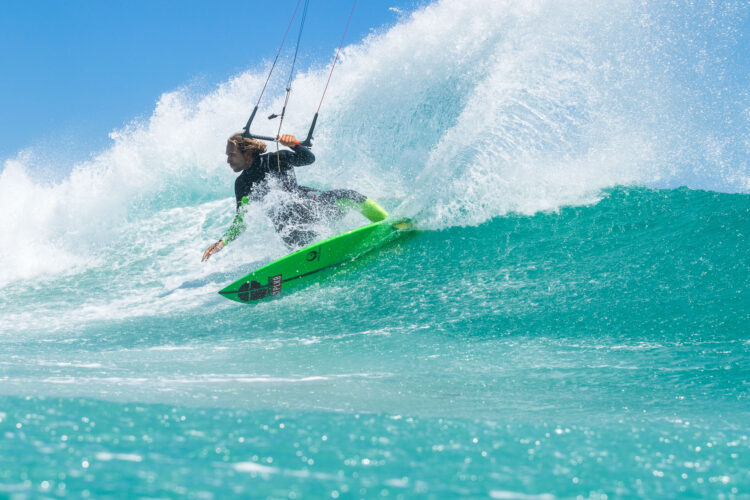
If I am riding in small waves, I choose a board with a squash tail. In small waves I like to be more playful and have the feeling of being a bit looser on the board. This allows me to create more variation in my riding. In my opinion a board with a squash tail is easier to throw and kick out your fins or slide out on the wave compared to the pintail. And how about sliding out after a top turn and catching grip late again, kicking out your fins at the back of the wave or performing a 360 after your top turn. All these variation are easier, for me personally, with a squash tail. As you’ve got less rail to use.
Outside your comfort zone
I only started to notice all these differences after 3 years of riding on a directional board. In addition, everyone has his or her own personal preferences. The best advice I can give is to try all kinds of boards to really start feeling differences. To understand the idea behind the shape of a board. Instead of trusting your old shape, try to get out of your comfort zone and test some different shapes. It could be an eye-opener…